










Breaking News
 Welfare Is Immoral in Any Country
 Hair-Raising Case: White Baltimore Arts Executive Fired For Wearing Cornrows
 The Honda NSX rises ... with more horsepower and carbon fiber
 'Hypocrite' Hillary Clinton is slammed for her comments on Fort Hood killer's...
Top Tech News
 Seven apps. One craft
 SHOCK CASE REPORT: Advanced Alzheimer's Patient Regains Speech, Memory, Mobility...
 Most artificial limbs rely on silicone or plastic to mimic human hands.
 Flying cell tower beams phone signal to Japan from 10 miles up
 Chinese Commercial Reactor Achieves Nuclear Fusion with Clean Hydrogen-Boron Fuel
 Med Beds Just Took a MASSIVE Step Forward, Healing People in Days!
 Palmer Luckey: Autonomous Weapons Are Ancient and Why Anduril Won't Build Humanoids | EP #295
 A laser just photographed objects through six feet of concrete
 Elon Musk's Next-Gen Motor Destroy Entire EV Industry
 China's disputed satellite refueling heralds new space war era



Welfare Is Immoral in Any Country
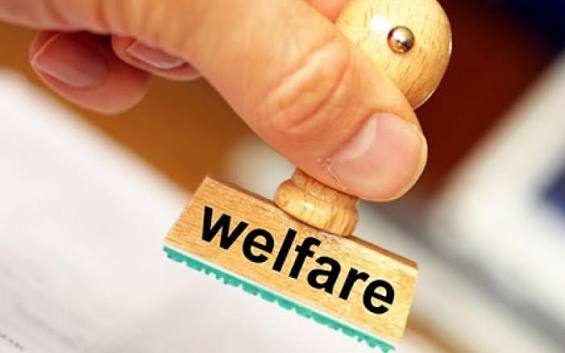
Some of these programs relate to food (food stamps), some to education (Head Start), some to health care (Medicaid), some to utilities (LIHEAP), and some to housing (Section 8 vouchers). Other programs provide cash payments, like Temporary Assistance to Needy Families (TANF), refundable tax credits, and Supplemental Security Income (SSI).
Although most European countries have similar welfare programs, most African countries — South Africa being a notable exception — are far behind when it comes to the provision of welfare. One of the poorest African countries is Liberia.
The Republic of Liberia, popularly just Liberia, is a tropical county located on the west coast of Africa. Unlike many African countries, Liberia escaped European colonial rule. Early in the 19th century, the United States began sending freed slaves to settle Liberia, and in 1847, the settlers declared their independence from the United States and established Africa's first republic. According to the CIA Factbook, Liberia has a "low-income West African economy; food scarcity, especially in rural areas; high poverty and inflation; bad recession prior to COVID-19 due to Ebola crisis; growing government debt; longest continuously operated rubbers plantation; large informal economy."
According to a recent story on NPR's All Things Considered, the government of Liberia "gave cash transfers to couples to see if it would help solve problems that arise when partners disagree about how to manage money."
The government had previously given money to "the female most responsible for household spending." However, this angered some men, who "felt like they were being excluded." So the government started giving money in equal amounts to both partners in households. The Liberian government "partnered with the World Bank and the nonprofit GiveDirectly and added a financial planning element to the cash transfer, which meant the couples had to discuss their spending priorities." More than 2,300 households in two counties received $750 in four installments.
About half of the families also received joint financial planning. Turns out that "households that received the planning actually were statistically even more better off economically than households who received only the cash transfer." Yet "if there had been previous incidents of domestic violence in the family, it increased only with the joint planning group."
And where does the government of Liberia get the money that it gives to certain households? Turns out that the Liberian government has an Internal Revenue Service (LIRS) that collects a progressive personal income tax, a corporate income tax, a goods and services tax (GST), excise taxes, a real property tax, and customs duties. The Liberian government has no money of its own. Before a dollar can be given to a Liberian household, it must first be collected from other Liberian households. No Liberian household is donating money to other Liberian households. Penalties for tax evasion in Liberia include fines, imprisonment, and/or seizure of assets. The Liberian government is operating an immoral income transfer scheme based on coercion.