










Breaking News
 A Forgotten 30 year forestry experiment produced astonishing results
 Data Centers Need $8.5 Trillion in Revenue Through 2030 to Cover Spending
 Republicans Have a Huge Gap in Ad Spending, But Does It matter?
 Alberta Overwhelmingly Votes to Stay in Canada in Historic Referendum
Top Tech News
 Bioinspired robot airdrops into remote waters via morphing wing-sail
 Anduril interceptor adapts to emerging threats via swappable stages
 I Built a Website to Expose Solar and Battery Scams
 Whistleblower Issues Dire Warning: Rogue AI, Hacking Nuclear Programs...
 Multi-material insulation delivers up to 10,000 x the stiffness
 Anduril's plan to save US sub edge from China's undersea surge
 Researchers Develop AI 'Mind-Reading' Tool That Reconstructs What Your Eyes See
 Video: Dexterous robot hand learns the delicate art of silk embroidery
 The computer that can read your mind:
 Seven apps. One craft



Ghosts of '97 haunt Prabowo as MSCI eyes Indonesia's exit
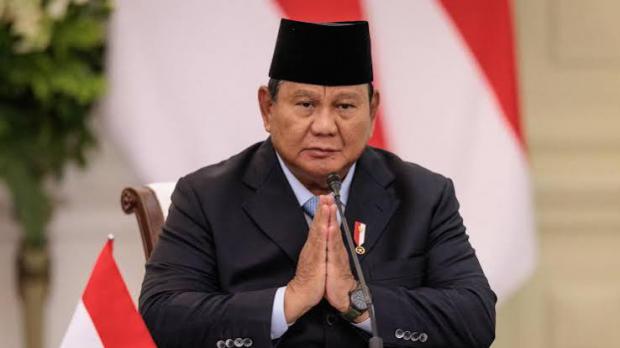
2026, it is learning how quickly an index provider can show Southeast Asia's biggest economy the exit, wreaking havoc on its stock market.
The provider is MSCI, which may be about to follow through on its threat to downgrade Indonesian stocks to "frontier" status, or to something worse: a standalone market category.
President Prabowo Subianto's team moved quickly, meeting MSCI officials on Monday (October 19) to seek an eleventh-hour reprieve. But Team Prabowo should look in the mirror, because the ghosts of 1997 are back.
Twenty-nine years ago, a rupiah devaluation sent global capital fleeing as Indonesia's economy collapsed amid the Asian financial crisis. President Suharto tried everything to stem the bleeding, including an ill-fated flirtation with a currency board.
By May 1998, with the economy in tatters, mass student protests forced Suharto from power. Successive governments have spent the years since rebuilding. Now the rupiah is setting new lows, and the bourse is suffering its steepest drop since the late 1990s.
However the MSCI standoff ends, investors can't unsee what they have watched over Prabowo's two years in office: rising economic nationalism, pressure on central bank independence, runaway populist spending, technocrats purged from the finance ministry, heavy state intervention and a giant new sovereign wealth fund with murky governance.
Now, "foreign capital is staging a full-blown exit from Indonesia's equity market, and now the bond market is feeling the heat," Eugenia Victorino, head of Asia strategy at Skandinaviska Enskilda Banken, told Bloomberg. "A sliding rupiah is eating real yields. Until the currency finds its footing, global money is content to watch this one safely from the sidelines."
A former general and once Suharto's son-in-law, Prabowo might at least project a veneer of transparency and market savvy. Instead, his economic team's priorities seem to lie elsewhere. That's been noted at the big three credit rating agencies, all of which have moved Indonesia's sovereign outlook to negative, citing long-term fiscal strain.
To be sure, not all of this is Prabowo's fault. The widening Iran war has exposed Indonesia's continued dependence on imported fuel, despite oil reserves of its own that have been mismanaged over the years. But the rupiah's slide, down 8.2% so far this year, the worst performance in Asia, reflects twin budget and current account deficits. Traders didn't need MSCI to tell them that.
It doesn't help that the chief executive of the Indonesia Stock Exchange, Jeffrey Hendrik, says the bourse was blindsided. "We never received any clue — nor any direct warning, either from MSCI or through any other parties," he said of last Friday's announcement.