










Breaking News
 Tampa Bay Rays seal World Series showdown with the Milwaukee Brewers after ALCS win...
 WNBA stars defy fan fury and walk off the court before the national anthem AGAIN ahead...
 Zemmour: French Riots Show "True Face Of The Great Replacement"
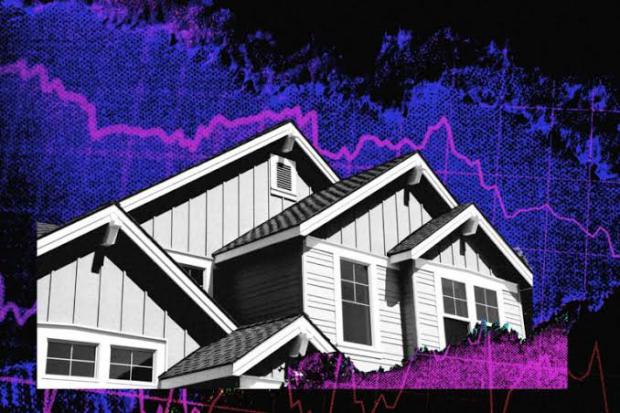
 Housing Starts Collapse Near COVID Lows As Homebuilder Confidence Crashes
Top Tech News
 Bioinspired robot airdrops into remote waters via morphing wing-sail
 Anduril interceptor adapts to emerging threats via swappable stages
 I Built a Website to Expose Solar and Battery Scams
 Whistleblower Issues Dire Warning: Rogue AI, Hacking Nuclear Programs...
 Multi-material insulation delivers up to 10,000 x the stiffness
 Anduril's plan to save US sub edge from China's undersea surge
 Researchers Develop AI 'Mind-Reading' Tool That Reconstructs What Your Eyes See
 Video: Dexterous robot hand learns the delicate art of silk embroidery
 The computer that can read your mind:
 Seven apps. One craft



US Pending Home Sales Collapse To Record Lows In September
After a very small rebound (+0.3% MoM) in August, US Pending Home Sales collapsed (-7.3% MoM vs -3.9% MoM exp) in September. That dragged
"Market conditions weakened in September due to fast-rising mortgage rates," says Lawrence Yun, NAR's chief economist.
"Although job growth and income gains can support home purchases, housing affordability is more affected by changes in mortgage rates...
...Buyers and sellers may simply be holding back until mortgage rates move favorably."
September's slump smashes the Pending Home Sales Index to a record low...
But Yun believes - ever the optimist - that the rapid run-up in mortgage rates over the last month may be nearing the end.
"Given that mortgage rates have already risen much more than the Federal Reserve's short-term interest rate hikes, mortgage rates could be topping out," Yun says.
"However, increasing energy prices and the resulting inflationary pressures are highly uncertain."
For the week of October 11, the 30-year fixed mortgage rate came in at 7.40% per Freddie Mac, flat sequentially and up 113bps YOY. Mortgage applications fell 37% YOY along with refinancings down 56% YOY, both similar to last week, while purchase volumes declined 16% YOY vs -15% last week. ARMs accounted for 11% of volume, up 20bps sequentially and vs 9% last year. Purchase applications were down 4% sequentially as rates hold at a 52-week high, though they are 5% above the February 2025 trough.
Goldman Sachs economists sum things up succinctly: "We expect near-term [housing] activity to remain under pressure given the rate and broader macro backdrop."
Contract signings in September dropped by the largest percentage in the West, falling 9.2% from August and down 15% from a year ago. The South followed with an 8.2% month-over-month and 12% annual decrease in September. The Midwest posted a 6.5% monthly decline and 8.7% decrease from a year ago.
Meanwhile, the Northeast fared best, but with pending home sales still falling 4.2% in September compared to August and down 9.4% from a year earlier. The region continues to grapple with some of the nation's tightest housing inventories, which has fueled strong price gains and ongoing bidding wars in some markets. In September, the Northeast posted the largest annual home price increase in the country, with the median existing-home price rising 5% to $523,600.
As a reminder, because houses typically go under contract a month or two before they're sold, the pending home sales data tend to be a leading indicator of closings that are captured in the monthly previously owned home sales reports.
Translation - this is terrible news building on an already ugly situation in the US housing market.