










Breaking News
 Here is what we know: U.S. taxpayer money, funneled through USAID and NIH,...
 Empire at 250: Can the Principles of 1776 Survive the American Police State?
 The Public Choice Problem of AI Rights
 Greenspan Was The Perfect Fed Chair. That Is Not a Compliment
Top Tech News
 Speculations on What Could Show Physics Beyond the Standard Model
 SpaceX Orbital Travel and Orbital Hotels Need Starfall – Getting Back Safe and Cheap is Exciting
 Lizard-inspired wiggly wheels let Mars rover swim through sand
 Fact Sheet: President Donald J. Trump Ushers in the Next Frontier of Quantum Innovation
 Researchers at Johns Hopkins University just let an AI-guided robot remove a dead pig's gallblad
 World's first consumer wing-in-ground effect aircraft takes flight
 America's Military Readiness Depends On Deployable Nuclear Power
 License Plate Cameras Are About To Start Tracking A Lot More Than Just Your Car
 Heads up: Apparently the government is hiding cameras inside fake utility boxes
 Sodium Batteries And EVs That Power The Grid: Inside GM's Big Energy Push



Expert Guts Claims That HPV Vaccine Reduces Cancer Risk
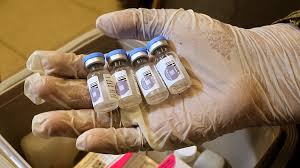
In an interview on the "Slobodni Podcast," Tomljenovi? said safety and efficacy claims are unsubstantiated, and the benefits of the vaccine do not outweigh the risks.
Public health policy should rest on solid, transparent evidence — not slogans, not marketing and not selective readings of scientific reviews, biochemist Lucija Tomljenovi?, Ph.D., said recently.
In a wide-ranging interview on the "Slobodni Podcast," Tomljenovi? challenged the evidence base for HPV vaccination programs.
She told host Andrija Klari? that safety and efficacy claims are unsubstantiated, and the benefits of the vaccine do not outweigh the risks.
The widely circulated claim that the HPV vaccine dramatically reduces cervical cancer risk — by as much as 80% if administered before age 16 — collapses under closer examination.
Tomljenovi? has published more than a dozen papers on the HPV vaccine. She was also an expert witness in litigation against Merck, maker of the Gardasil HPV vaccine. In that role, she presented a systematic critique of the claims that the HPV vaccine prevents cancer.
She also delivered an overview of the science on the adverse events associated with the shot, and she presented evidence that Merck manipulated regulators and legislators to grow the market for its vaccine.
Claims that HPV vaccine reduces cancer risk based on flawed Cochrane reviews
Tomljenovi? explained for "Slobodni" listeners why the 2025 Cochrane reviews on HPV vaccines — widely cited by health authorities and the media to support the claim that the vaccine reduces cervical cancer incidence by up to 80% — are flawed.
She said the reviews' own data undermine their conclusions.
The Cochrane Library is often regarded as the gold standard of systematic reviews, she said. Mainstream health institutions often base recommendations on findings from Cochrane.
However, systematic reviews are only as reliable as the studies they include, she said.
According to Tomljenovi?'s analysis of the 300-plus-page review, the majority of epidemiological studies cited to show the vaccine's effects — including its ability to stop invasive cervical cancer — had serious or critical risk of bias, according to the ratings of Cochrane's own reviewers.