










Breaking News
 Here is what we know: U.S. taxpayer money, funneled through USAID and NIH,...
 Empire at 250: Can the Principles of 1776 Survive the American Police State?
 The Public Choice Problem of AI Rights
 Greenspan Was The Perfect Fed Chair. That Is Not a Compliment
Top Tech News
 Speculations on What Could Show Physics Beyond the Standard Model
 SpaceX Orbital Travel and Orbital Hotels Need Starfall – Getting Back Safe and Cheap is Exciting
 Lizard-inspired wiggly wheels let Mars rover swim through sand
 Fact Sheet: President Donald J. Trump Ushers in the Next Frontier of Quantum Innovation
 Researchers at Johns Hopkins University just let an AI-guided robot remove a dead pig's gallblad
 World's first consumer wing-in-ground effect aircraft takes flight
 America's Military Readiness Depends On Deployable Nuclear Power
 License Plate Cameras Are About To Start Tracking A Lot More Than Just Your Car
 Heads up: Apparently the government is hiding cameras inside fake utility boxes
 Sodium Batteries And EVs That Power The Grid: Inside GM's Big Energy Push



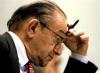
Greenspan Was The Perfect Fed Chair. That Is Not a Compliment
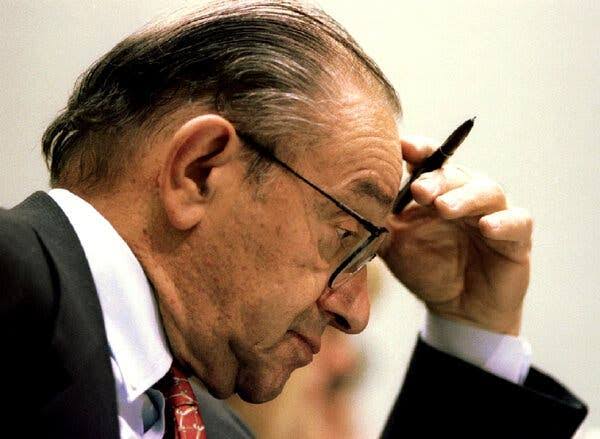
On Monday, Alan Greenspan died at age 100. The former Federal Reserve Chair spent eighteen and a half years at the helm of the central bank from 1987 to 2006—a total of five terms under four presidents.
As with any death of a prominent figure, the news led many to reflect on Greenspan's legacy and, in this case, debate how he stacks up with other Federal Reserve chairs. And, although there was plenty of respect for Greenspan as a person from more establishment-friendly sources, broadly, the consensus on his performance as Fed Chair ran from mixed to negative.
Even the tributes and obituaries that leaned the most into the narrative that Greenspan was the so-called "Maestro"—or the brilliant, steady, data-driven, almost priestly public servant who helped engineer a long period of durable growth and low inflation—admitted that the collapse of the housing bubble and "Great Recession" that kicked off shortly after Greenspan left the Fed greatly tarnished his image.
The critics who understand that Greenspan did not merely miss the signs of that impending economic catastrophe but actively created and fueled it were much more scathing in their judgments of his time at the Fed.
However, this entire discussion is flawed. Because it rests on the false assumption that the Federal Reserve and all its intellectual backers in the political class can be taken at their word: that the Fed is an institution that is genuinely capable of and interested in bringing about a stable, growing economy, and, therefore, that a good Fed Chair is someone who simply manages the economy well. That is all a lie.