










Breaking News
 UPDATE: Netanyahu Declares Israel Will Not Comply With Lebanese Portion Of Peace Deal
 At Least Five Killed as Israel Continues To Pound Southern Lebanon
 America's Hidden Food Crisis and the Fear of Confiscation
 Trump: Iran Deal to Be Inked on Sunday Ahead of G7
Top Tech News
 Heads up: Apparently the government is hiding cameras inside fake utility boxes
 Sodium Batteries And EVs That Power The Grid: Inside GM's Big Energy Push
 NUCLEAR ENGINE - UNLIMITED LUXURY - 20 YEARS WITHOUT REFUELING
 China Unveils Nuclear-Powered Floating Hub For Green Shipping
 China Launches World's 1st Commercial Brain Chip, Beating Elon Musk's Neuralink!
 Modular next-gen US nuclear reactor goes critical
 How EMF's cause disease
 This Company Will Add Phone, AirPod, and Smartwatch Trackers to License Plate Readers
 Elon Details SpaceX AI Data Center in Space Details and Roadmap
 5-in-1 miniature surgical robot is the size of a seed


Trump has backed away from renewed war with Iran – here's why
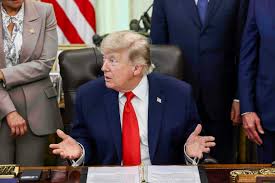
The US and Iran stepped back from the brink of returning to all-out war on June 11. Hours after saying the US military would carry out strikes against Iran for a third consecutive night, Donald Trump postponed the attack. The Iranian military had said the US would "receive a more severe response than before" if it followed through on its threats.
Trump claimed to have canceled the strikes because of progress in negotiations between the two countries. In a statement posted on social media, Trump said: "Discussions and final points have been, in both concept and great detail, approved by all parties involved." He later added that the deal is set to be signed over the "next few days."
Whether this will happen remains to be seen. On numerous occasions Trump has declared that a deal between the US and Iran is imminent only for no agreement to be signed. Iran's foreign ministry has also called claims that an agreement has been reached speculative, insisting that "nothing has been finalized."
And, even if it is signed, the agreement Trump is talking about is far from a final peace deal. It appears to be a memorandum of understanding, establishing a framework for the two countries to talk about unresolved issues. These include Iran's ballistic missile capabilities and nuclear programme.
Rather than the supposed diplomatic progress, perhaps more significant in persuading Trump to pull back from renewing an all-out war with Iran was that a return to conflict simply would not have been in the interests of the US.
War, as Prussian military strategist Carl von Clausewitz observed in his 1832 book On War, is the continuation of politics by other means. Its enormous costs can be justified only when they are tied to a coherent strategy and when there is a clearly defined political objective that there is a reasonable prospect of achieving.
Measured against this standard, there was no argument for returning to war with Iran. The difficulty begins with the absence of any discernible plan in Washington. Trump has articulated no strategy and no definition of victory beyond a vague aspiration to prevent Iran from obtaining nuclear weapons.
He was drawn into prosecuting a war based on intelligence – about the fragility of the regime in Tehran – that proved flawed and on scenarios that were overconfident and have not come to pass. These scenarios suggested the decapitation of Iran's leadership would lead to sudden regime collapse and a popular uprising that would see the country transition to democracy.
There is also very little a return to all-out war could have accomplished. The reason for this is that the Iranian regime is not a conventional state that can be brought down by overwhelming firepower. The regime, which is now dominated by the powerful Islamic Revolutionary Guard Corps, can best be described as a militia with a state.