










Breaking News
 UPDATE: Netanyahu Declares Israel Will Not Comply With Lebanese Portion Of Peace Deal
 At Least Five Killed as Israel Continues To Pound Southern Lebanon
 America's Hidden Food Crisis and the Fear of Confiscation
 Trump: Iran Deal to Be Inked on Sunday Ahead of G7
Top Tech News
 Heads up: Apparently the government is hiding cameras inside fake utility boxes
 Sodium Batteries And EVs That Power The Grid: Inside GM's Big Energy Push
 NUCLEAR ENGINE - UNLIMITED LUXURY - 20 YEARS WITHOUT REFUELING
 China Unveils Nuclear-Powered Floating Hub For Green Shipping
 China Launches World's 1st Commercial Brain Chip, Beating Elon Musk's Neuralink!
 Modular next-gen US nuclear reactor goes critical
 How EMF's cause disease
 This Company Will Add Phone, AirPod, and Smartwatch Trackers to License Plate Readers
 Elon Details SpaceX AI Data Center in Space Details and Roadmap
 5-in-1 miniature surgical robot is the size of a seed


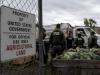
America's Hidden Food Crisis and the Fear of Confiscation
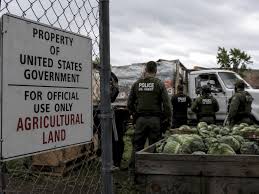
In a world increasingly shaped by shortages, crises, and expanding emergency powers, some fear that the next battle for control may not be over money or energy, but over something far more essential: food itself.
For generations, people understood something that modern society gradually allowed itself to forget. True wealth had very little to do with numbers displayed on computer screens or with the promises printed on paper. Real security was tangible. It could be stacked on shelves, buried beneath layers of earth, preserved inside jars, hanging in smokehouses, or walking around inside a fenced pasture. Families who had survived wars, economic depressions, devastating droughts, and entire decades of uncertainty understood that food itself represented freedom. It was not merely something purchased at the supermarket. It was insurance against chaos, protection against hunger, and perhaps the only form of wealth that retained its value when everything else collapsed. Long before refrigerated trucks and sprawling distribution networks became the backbone of modern civilization, people depended upon their own gardens, livestock, orchards, and skills to survive. They planted seeds because previous generations had taught them that difficult times were never as far away as most people imagined.
The Great Depression left scars that remained visible long after the economy recovered. Families who endured those years remembered standing in bread lines and watching neighbors lose everything they possessed. Many swore that they would never again allow themselves to become entirely dependent upon systems beyond their control. The same mentality existed among those who lived through wartime rationing. They understood that governments, no matter how powerful, could not always guarantee abundance. Consequently, root cellars, preserved vegetables, fruit trees, chickens, rabbits, and smokehouses became ordinary parts of everyday life. None of these practices were considered unusual or extreme. They represented common sense passed down through generations that had learned survival through hardship rather than convenience.
As decades passed, however, prosperity transformed attitudes. Supermarkets expanded, transportation networks became more efficient, and global trade created the illusion that shortages belonged exclusively to history books. Entire generations grew up believing that shelves would always remain full and that supply chains were as permanent as the ground beneath their feet. Few people stopped to consider how dependent modern civilization had become upon systems so vast and interconnected that even minor disruptions could trigger consequences extending thousands of miles beyond their origin. Preparedness slowly became associated with pessimism. Those who stored extra food or devoted time to growing their own crops often found themselves labeled eccentric or paranoid. Yet history has repeatedly demonstrated that societies tend to rediscover forgotten wisdom only after crises force them to remember what previous generations already knew.
The financial collapse of 2008 served as a harsh reminder that stability itself could disappear with frightening speed. Millions of people watched savings evaporate, homes vanish, and lifelong careers collapse almost overnight. In the years that followed, interest in self-sufficiency quietly began to re-emerge. Backyard chickens became increasingly common, heirloom seeds regained popularity, and homesteading communities expanded rapidly across the country. More families began asking questions that their grandparents would have considered perfectly ordinary. How much food should a household store? What would happen if transportation networks experienced major disruptions? How vulnerable had modern civilization become after decades of replacing local production with centralized distribution systems that prioritized efficiency over resilience?