










Breaking News
 UPDATE: Netanyahu Declares Israel Will Not Comply With Lebanese Portion Of Peace Deal
 At Least Five Killed as Israel Continues To Pound Southern Lebanon
 America's Hidden Food Crisis and the Fear of Confiscation
 Trump: Iran Deal to Be Inked on Sunday Ahead of G7
Top Tech News
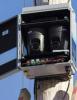 Heads up: Apparently the government is hiding cameras inside fake utility boxes
 Sodium Batteries And EVs That Power The Grid: Inside GM's Big Energy Push
 NUCLEAR ENGINE - UNLIMITED LUXURY - 20 YEARS WITHOUT REFUELING
 China Unveils Nuclear-Powered Floating Hub For Green Shipping
 China Launches World's 1st Commercial Brain Chip, Beating Elon Musk's Neuralink!
 Modular next-gen US nuclear reactor goes critical
 How EMF's cause disease
 This Company Will Add Phone, AirPod, and Smartwatch Trackers to License Plate Readers
 Elon Details SpaceX AI Data Center in Space Details and Roadmap
 5-in-1 miniature surgical robot is the size of a seed


AI's Core Flaw: "Mass Regurgitation Of Misinformation"

I approach all AI topics with several things in mind. One is the nature of problems, which implicitly define what qualifies as solutions, and the resulting incentive to define the "problem" such that the "solution" happens to be the one we own and control.
So the "problem" AI solves is "corporate profits are too low," and so the "solution" is to replace costly human labor (made costlier by SickCare insurance and taxes on labor) with "cheaper" AI (cheaper because the full costs are hidden or subsidized).
My other lens: the economic, social and cultural consequences of AI as it is and AI hype, a topic I've explored most recently in Is AI Reversing Anti-Progress or Is It Accelerating It?, AI Data Centers Are Not the Railroads of Today and Inequality, AI and Digital Life Are Undermining Society.
Correspondent Mike Fasano recently submitted a succinct and telling summary of AI's insurmountable structural flaw: AI's inability to discern the difference between truth and falsehood, be it intentional misdirection / misinformation or errors generated by AI hallucinations, a systemic flaw which he summarized as mass regurgitation of misinformation:
"I read you post on AI and railroads. Here is another observation.
So far, AI has only regurgitative intelligence. It--at best--can collate and respond to queries on masses of acquired data.
But what if that data is wrong?
Who now believes the inflation or unemployment statistics? Virtually every human knows that those statistics are false.
Does AI know that?
And the problem goes much deeper.
The former editor of the New England Journal of Medicine, Marcia Angell, noted:
'It is simply no longer possible to believe much of the clinical research that is published, or to rely on the judgment of trusted physicians or authoritative medical guidelines. I take no pleasure in this conclusion, which I reached slowly and reluctantly over my two decades as an editor of the New England Journal of Medicine.'
That being the case, can we rely up AI medical advice?