










Breaking News
 A Million People On Mars
 SpaceX Acquires Cursor AI In $60 Billion Deal As Coding Agent Race Heats Up
 From Hormuz To Houston: The US Takeover Of Global Energy Flows Ramps Up
 US Housing Starts Collapsed In May To Lowest Since COVID
Top Tech News
 Heads up: Apparently the government is hiding cameras inside fake utility boxes
 Sodium Batteries And EVs That Power The Grid: Inside GM's Big Energy Push
 NUCLEAR ENGINE - UNLIMITED LUXURY - 20 YEARS WITHOUT REFUELING
 China Unveils Nuclear-Powered Floating Hub For Green Shipping
 China Launches World's 1st Commercial Brain Chip, Beating Elon Musk's Neuralink!
 Modular next-gen US nuclear reactor goes critical
 How EMF's cause disease
 This Company Will Add Phone, AirPod, and Smartwatch Trackers to License Plate Readers
 Elon Details SpaceX AI Data Center in Space Details and Roadmap
 5-in-1 miniature surgical robot is the size of a seed


US-Iran accord may crumble faster than the ink can dry
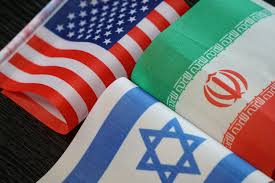
Shehbaz Sharif, the prime minister of Pakistan who served as the key negotiator between the US and Iran, announced on June 14, 2026, that the two sides had agreed on a deal to end the war. It will be officially signed on June 19 in Switzerland.
US President Donald Trump announced it on Truth Social as a triumph, claiming that the Strait of Hormuz is open for everyone, the US blockade has been lifted and the oil is flowing again. What Trump did not mention was Iran's nuclear program and what happens to its enriched uranium stockpile, one of the main reasons cited for starting the war.
The nuclear issue – along with core issues such as ballistic missiles and Iran's proxies – has been deferred for 60 days. This raises two important questions: What was the war actually for? And what did the US achieve?
As an international and nuclear security expert, I believe the answer is nothing – and in the process the US lost credibility as a negotiating partner.
Why the nuclear question is the hardest
The "rationalist theory of war," as developed by political scientist James Fearon in 1995, identifies three problems that drive states to war when they would prefer to reach a deal: incomplete information about each other's resolve; the inability to credibly promise a deal or commitment; and what international relations scholars call the indivisibility problem – when the thing in dispute cannot be split or shared, because it leaves no middle ground to settle on.
The war clarified the first reason. Each side saw what the other would actually do – how much force the US was willing to use and what Iran could absorb while still staying in the fight. What the war could not solve was the nuclear commitment problem. And this goes far back between the US and Iran.
Iran adhered to the 2015 Joint Comprehensive Plan of Action, the landmark nuclear deal that restricted Tehran's nuclear program. The International Atomic Energy Agency verified that Tehran kept uranium enrichment to 3.67% and its stockpile under 300 kilograms – a concentration used to fuel a power reactor but far too low for a weapons program.
But the US walked away in 2018, and Trump later called it "the worst deal ever" over its sunset clauses and on its silence on Iran's ballistic missiles.