










Breaking News
 Mel Gibson's wild claim ivermectin curbs cancer leads to significant spike in prescriptions
 Child genius claims he was recruited into a secret program to mentally pilot UFOs
 The Kyle Anzalone Show - Karen Kwiatkowski will be hosting this week...
 Hegseth Orders Review Of US Force Posture In Europe, Warns NATO Laggards Of Consequences
Top Tech News
 Heads up: Apparently the government is hiding cameras inside fake utility boxes
 Sodium Batteries And EVs That Power The Grid: Inside GM's Big Energy Push
 NUCLEAR ENGINE - UNLIMITED LUXURY - 20 YEARS WITHOUT REFUELING
 China Unveils Nuclear-Powered Floating Hub For Green Shipping
 China Launches World's 1st Commercial Brain Chip, Beating Elon Musk's Neuralink!
 Modular next-gen US nuclear reactor goes critical
 How EMF's cause disease
 This Company Will Add Phone, AirPod, and Smartwatch Trackers to License Plate Readers
 Elon Details SpaceX AI Data Center in Space Details and Roadmap
 5-in-1 miniature surgical robot is the size of a seed


Hegseth Orders Review Of US Force Posture In Europe, Warns NATO Laggards Of Consequences
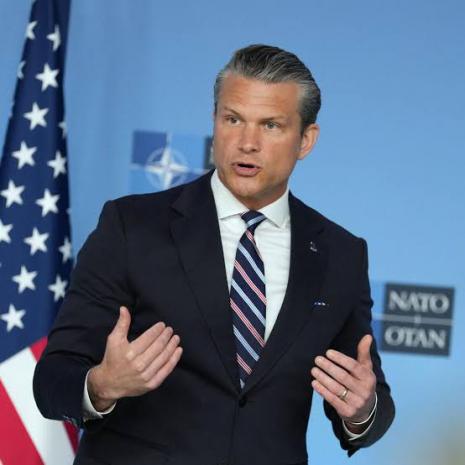
U.S. Secretary of War Pete Hegseth on June 18 announced a six-month review of U.S. force posture and basing in Europe, warning that NATO allies failing to meet defense spending commitments could face consequences as Washington pushes the alliance toward what he called a new era of burden-sharing.
Speaking at a meeting of NATO defense ministers in Brussels, Hegseth said the review would examine America's military footprint in Europe and help ensure that European allies assume primary responsibility for the continent's conventional defense.
"I'm announcing today a six-month Department of War review that will examine America's force posture and basing in Europe," Hegseth said.
The review comes as the Trump administration is pushing NATO members to increase defense spending and take over capabilities long provided by the United States.
Earlier this month, NATO officials disclosed that the United States would no longer assign certain capabilities—including an aircraft carrier strike group, support ships, aerial refueling aircraft, and dozens of combat aircraft—to NATO crisis-response plans.
The Trump administration has said that the United States must preserve greater military flexibility as it prepares for the possibility of simultaneous conflicts, particularly in the Indo-Pacific region.
Hegseth described the U.S. force posture review as part of a broader transformation of the alliance into "NATO 3.0," a return to what he characterized as NATO's original mission as a hard-edged military alliance focused on deterrence and warfighting.
"It will be designed to ensure that NATO is moving fast and irreversibly toward Europe leading, stepping up to take primary responsibility for the defense of Europe, stepping up to ensure our forces are postured for America's global needs," Hegseth said.
Although Hegseth did not question the U.S. commitment to NATO's Article 5 collective defense clause, he indicated that allies failing to meet spending targets could see reductions in U.S. contributions.
"Going forward, our annual NATO dues will be contingent on other countries meeting their defense spending targets," he said. "Where other allies do not spend with urgency, our dues contributions will go down. ... It's a review that some countries will fail and others will pass with flying colors."