










Breaking News
 The current "UFO/UAP disclosure" campaign is not a grassroots or independent effort.
 Scientists Discover A 113-million-year-old Pterosaur Wing Preserved In Extraordinary Detail
 States Finally Begin to Roll Back Free Healthcare for Illegal Aliens
 Trump's ready to reopen mental institutions and liberals are furious…
Top Tech News
 Heads up: Apparently the government is hiding cameras inside fake utility boxes
 Sodium Batteries And EVs That Power The Grid: Inside GM's Big Energy Push
 NUCLEAR ENGINE - UNLIMITED LUXURY - 20 YEARS WITHOUT REFUELING
 China Unveils Nuclear-Powered Floating Hub For Green Shipping
 China Launches World's 1st Commercial Brain Chip, Beating Elon Musk's Neuralink!
 Modular next-gen US nuclear reactor goes critical
 How EMF's cause disease
 This Company Will Add Phone, AirPod, and Smartwatch Trackers to License Plate Readers
 Elon Details SpaceX AI Data Center in Space Details and Roadmap
 5-in-1 miniature surgical robot is the size of a seed


8 Frightening Forecasts For The Future Of Fraud
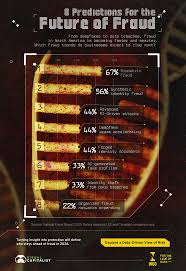
This visualization, created by Visual Capitalist's Julia Wendling, in partnership with Inigo for the Fraud in Data campaign's sixth post, uses data from the Sumsub Fraud Report 2025 to explore the fraud trends businesses believe will shape the future of digital risk.
Biometric Fraud Could Become the Biggest Threat
Surveyed businesses expect biometric fraud to rise the most, with 67% predicting an increase. As companies rely more on facial recognition, voice authentication, and remote onboarding, fraudsters are finding new ways to exploit those systems.
Deepfake technology is already making identity verification harder. In the future, AI-generated videos, cloned voices, and stolen biometric data could make fraud attempts more convincing and more scalable than ever before.
Businesses also expect synthetic identity fraud to grow, with 56% anticipating a rise. Criminals are increasingly combining real and fake information to create identities that can bypass traditional fraud checks.
AI and Deepfakes Are Changing Fraud Trends
Businesses expect fraud attacks to become more automated in 2026. Around 44% predict increases in advanced AI-driven attacks, deepfake scams, and forged identity documents.
Another 33% expect AI-generated fake profiles to rise as fraudsters use generative AI tools to impersonate real users online. These scams could become faster to produce and harder to detect across financial services, ecommerce, and digital platforms.
As fraud tactics evolve, businesses may need to shift from reactive fraud prevention toward real-time risk monitoring powered by machine learning and behavioral analysis.
Data Breaches Will Continue to Fuel Identity Fraud
Data breaches are expected to remain a major source of fraud risk. About 33% of businesses anticipate more identity theft linked to stolen personal data.
Organized fraud networks are also expanding, according to 22% of respondents. As cybercriminal groups become more coordinated, fraud operations could become increasingly global and industrialized.