










Breaking News
 The current "UFO/UAP disclosure" campaign is not a grassroots or independent effort.
 Scientists Discover A 113-million-year-old Pterosaur Wing Preserved In Extraordinary Detail
 States Finally Begin to Roll Back Free Healthcare for Illegal Aliens
 Trump's ready to reopen mental institutions and liberals are furious…
Top Tech News
 Heads up: Apparently the government is hiding cameras inside fake utility boxes
 Sodium Batteries And EVs That Power The Grid: Inside GM's Big Energy Push
 NUCLEAR ENGINE - UNLIMITED LUXURY - 20 YEARS WITHOUT REFUELING
 China Unveils Nuclear-Powered Floating Hub For Green Shipping
 China Launches World's 1st Commercial Brain Chip, Beating Elon Musk's Neuralink!
 Modular next-gen US nuclear reactor goes critical
 How EMF's cause disease
 This Company Will Add Phone, AirPod, and Smartwatch Trackers to License Plate Readers
 Elon Details SpaceX AI Data Center in Space Details and Roadmap
 5-in-1 miniature surgical robot is the size of a seed


Exclusive--Richard Samuelson: Founding Friendship: In Life and in Death John Adams...
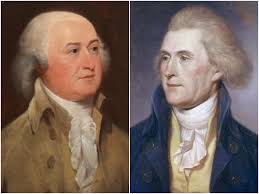
In life and in death, the lives of John Adams and Thomas Jefferson are bound up with American independence and our Declaration of Independence. As many Americans know, the two patriots died on the first great anniversary of Independence, July 4, 1826.
The contrast between the concerns of 1776 and the celebrations of 1826 are hard to understate. In July 1776, the British King had sent the largest military force ever sent to the Americas to subdue the colonists. On July 2, 1776, the day on which Congress voted that "these colonies are and of right ought to be free and independent states," the troops began landing in New York. There was no guarantee that the Americans would succeed. And yet they believed they would. As John Adams wrote his wife, Abigail, on July 3, "I am well aware of the Toil and Blood and Treasure, that it will cost Us to maintain this Declaration, and support and defend these States. — Yet through all the Gloom I can see the Rays of ravishing Light and Glory." And, he noted, should we succeed, Independence Day should become an annual festival that "ought to be commemorated, as the Day of Deliverance by solemn Acts of Devotion to God Almighty. It ought to be solemnized with Pomp and Parade, with Shews, Games, Sports, Guns, Bells, Bonfires and Illuminations from one End of this Continent to the other from this Time forward forever more."
If we lost Jefferson, Adams and the others who became our founding fathers would hang. As it was illegal in British law for a British subject to renounce his allegiance to the King, the first and only evidence the British would need in a trial would be a copy of the Declaration with their signature on it. That was the bravado in John Hancock's line about signing the Declaration in letters large enough for the King to read it without his spectacles. In short, signing the Declaration was no laughing matter, and pledging their lives, fortunes, and sacred honor was more than mere rhetoric. Even John Dickinson, the leading opponent of the Declaration in July 1776, was in the same boat. And where did he go after the vote? To New York, where he would lead troops in our fight against the British.
But the men of 1776 did not despair. There were some close calls, for Adams and Jefferson. Adams nearly died an icy death when his ship, chased by the British, sprung a leak on the treacherous crossing of the Atlantic in late 1779 when he was sent to serve as our lead diplomat if, or when, it was time to negotiate a treaty with Britain to secure Independence. And the British nearly caught Jefferson at Monticello in 1781, when he had just completed his term as Virginia's governor, when they invaded the state in the latter part of the war. And dangerous it was for the other men of 1776, in Congress and out. Perhaps with the aid of Providence, we won the war. Jefferson would later describe it as "the bold and doubtful election we were to make for our country, between submission or the sword."