










Breaking News
 The Truth About Soil Health (And Why It Changes Everything)
 Elon Musk's SpaceX IPO Is Funded by Other People's Pensions
 1.2 million fake students applied to California community colleges last year. What's being done?
 Brazilian Parents Sentenced to 50 Days in Jail for Homeschooling Their Girls
Top Tech News
 Heads up: Apparently the government is hiding cameras inside fake utility boxes
 Sodium Batteries And EVs That Power The Grid: Inside GM's Big Energy Push
 NUCLEAR ENGINE - UNLIMITED LUXURY - 20 YEARS WITHOUT REFUELING
 China Unveils Nuclear-Powered Floating Hub For Green Shipping
 China Launches World's 1st Commercial Brain Chip, Beating Elon Musk's Neuralink!
 Modular next-gen US nuclear reactor goes critical
 How EMF's cause disease
 This Company Will Add Phone, AirPod, and Smartwatch Trackers to License Plate Readers
 Elon Details SpaceX AI Data Center in Space Details and Roadmap
 5-in-1 miniature surgical robot is the size of a seed


FCC Wants to Kill Burner Phones By Forcing Telecoms to Get All Customers' IDs
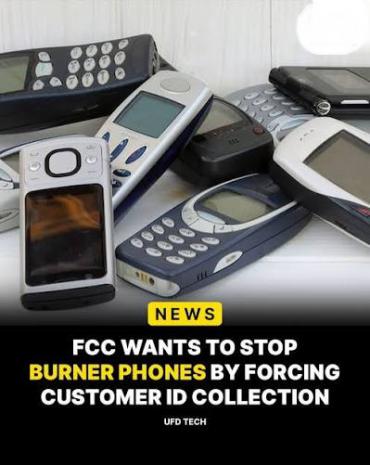
(404 Media) The Federal Communications Commission (FCC) wants to make it effectively impossible for people to buy what many call burner phones—a phone not explicitly linked to your identity at the point of purchase—which would impact privacy-conscious people, to domestic abuse survivors, to journalists, and many more. The FCC plans to do this by legally forcing the country's telecoms to store a wealth of personal information about essentially all phone customers, including a government issued identification number and their physical address, alarming privacy advocates and civil rights activists who compare the measures to those from authoritarian countries where it can be difficult to buy a mobile phone plan without giving up your identity.
The proposed change would drastically shake up how people obtain phone plans in the U.S., and have all sorts of privacy and cybersecurity knock-on effects. The FCC is proposing the data collection partly as a way to combat scammers, with telecoms being required to collect other information on business and foreign customers like the intended use case of their bulk phone plan purchase and their IP address. But the changes would mean telecoms collect data on all new and renewing customers, and the FCC provides a long list of other things that the collected data could help authorities with.