










Breaking News
 The Great Rotation Has Begun... Here's How to Make Your Money Back
 Blue Origin plans to fly New Glenn rocket again this year despite massive rocket explosion
 Through Technology, a Centuries-Old Battle Is Coming to a Head
 Chinese cars go blacker than black via hybrid nano tech
Top Tech News
 'Groundbreaking' Potential Lupus Cure Sends Patients into Remission, Allowing Dreams...
 Speculations on What Could Show Physics Beyond the Standard Model
 SpaceX Orbital Travel and Orbital Hotels Need Starfall – Getting Back Safe and Cheap is Exciting
 Lizard-inspired wiggly wheels let Mars rover swim through sand
 Fact Sheet: President Donald J. Trump Ushers in the Next Frontier of Quantum Innovation
 Researchers at Johns Hopkins University just let an AI-guided robot remove a dead pig's gallblad
 World's first consumer wing-in-ground effect aircraft takes flight
 America's Military Readiness Depends On Deployable Nuclear Power
 License Plate Cameras Are About To Start Tracking A Lot More Than Just Your Car
 Heads up: Apparently the government is hiding cameras inside fake utility boxes



US Strikes Iran In Retaliation To Hormuz Ship Attack
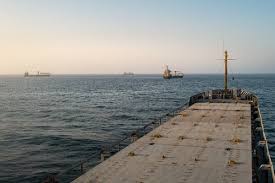
Update (5:00pm ET): As was expected, the US retaliated against Iran one day after Tehran struck a commercial ship in the Strait of Hormuz, a tit-for-tat exchange similar to one observed a week ago, and one which threatened to break the two countries' fragile ceasefire although we doubt there will be further escalation.
US Central Command said that American aircraft on Friday hit Iranian missile and drone storage sites as well as coastal radar installations, reportedly on Sirik Island located near the Strait of Hormuz, calling it a "powerful response to yesterday's attack."
U.S. aircraft struck Iranian missile and drone storage locations and coastal radar sites after Iran hit M/V Ever Lovely on June 25 with a one-way attack drone. The Singapore-flagged cargo ship was exiting the Strait of Hormuz along the Omani coast at the time of Iran's attack.
The unwarranted aggression against commercial shipping by Iranian forces clearly violated the ceasefire. Furthermore, Iran's dangerous behavior undermined freedom of navigation as commerce increasingly flows through the vital international trade corridor.
CENTCOM forces continue to provide safe passage coordination and support to commercial vessels transiting the strait. The U.S. military remains present and vigilant to ensure all aspects of the agreement with Iran are adhered to, obeyed, and in full force and effect.
Fox reporter Jennifer Griffin said that according to senior US defense officials the strikes on Iranian targets are "ongoing" right now.
According to unconfirmed reported from military bloggers, there is currently intensified U.S. military air activity is now underway over the Gulf of Oman and the Persian Gulf, with 6 U.S. Air Force aerial refueling tankers operating alongside a U.S. Navy P-8A Poseidon maritime patrol aircraf
On Thursday, the Singapore-flagged container ship Ever Lovely sustained damage from what the US said was a one-way Iranian attack drone. The incident irked President Donald Trump, who said earlier Friday that "I don't like the fact that they took a shot."
"They shouldn't be doing that," Trump told reporters at the White House.
Earlier on Friday, he wrote on Truth Social that the Iranian attack was "a foolish violation of our Ceasefire Agreement
Since signing a 60-day truce last week, Trump has said that he would resume fighting against Iran if Tehran violates its terms, which provides for the flow of vessels through the vital waterway and talks over its nuclear program in exchange for sanctions relief.
The question now is whether the resumption of strikes will slow progress toward restoring shipping traffic in the vital energy thoroughfare to pre-war levels. Washington and Tehran were able to agree to an interim peace deal last week despite trading strikes in the lead-up to that document being finalized.
But the two sides continue to clash over key provisions of the deal, including whether Iran will impose tolls or other monetary costs on ships seeking to sail through Hormuz. Oman told European officials that vessels may ultimately have to be charged some fees, Bloomberg reported earlier.