










Breaking News
 The Great Rotation Has Begun... Here's How to Make Your Money Back
 Blue Origin plans to fly New Glenn rocket again this year despite massive rocket explosion
 Through Technology, a Centuries-Old Battle Is Coming to a Head
 Chinese cars go blacker than black via hybrid nano tech
Top Tech News
 'Groundbreaking' Potential Lupus Cure Sends Patients into Remission, Allowing Dreams...
 Speculations on What Could Show Physics Beyond the Standard Model
 SpaceX Orbital Travel and Orbital Hotels Need Starfall – Getting Back Safe and Cheap is Exciting
 Lizard-inspired wiggly wheels let Mars rover swim through sand
 Fact Sheet: President Donald J. Trump Ushers in the Next Frontier of Quantum Innovation
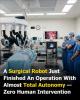 Researchers at Johns Hopkins University just let an AI-guided robot remove a dead pig's gallblad
 World's first consumer wing-in-ground effect aircraft takes flight
 America's Military Readiness Depends On Deployable Nuclear Power
 License Plate Cameras Are About To Start Tracking A Lot More Than Just Your Car
 Heads up: Apparently the government is hiding cameras inside fake utility boxes



Through Technology, a Centuries-Old Battle Is Coming to a Head

One of their tag lines is "Connecting Companies with Communities." As a data scientist and software developer, Travis is known for his contributions to Python and as the creator of NumPy and a founding contributor to SciPy, which together formed a foundation for modern AI and machine learning.
When I was in Salt Lake City in the first week of June, Travis and I went into a studio to record this interview, continuing a conversation we had started when Travis and his team visited the Solari team in the Netherlands in early 2026. Our discussion focuses on how we can understand and manage the growing presence of AI in our lives.
Travis has an impressive intellectual and entrepreneurial background. After earning Bachelor and Master of Science degrees in mathematics and electrical engineering at Brigham Young University, he completed a PhD in biomedical engineering at the Mayo Clinic. As an assistant professor at Brigham Young's Department of Electrical and Computer Engineering from 2001 to 2007, he directed the Biomedical Imaging Lab, where his research centered on computational imaging techniques. He then went on to start several companies, each time identifying the need for a new standard, building the open-source infrastructure, and helping enterprises adopt it at scale.
Brilliant, open-minded, deeply caring, and generous, Travis is someone who can help us understand what is happening and what we do about it. My hope is this will be the first of many conversations as we navigate the acceleration in technological innovation (and skullduggery) and seek to ensure that tools such as AI serve the health and prosperity of a human civilization.