










Breaking News
 The Great Rotation Has Begun... Here's How to Make Your Money Back
 Blue Origin plans to fly New Glenn rocket again this year despite massive rocket explosion
 Through Technology, a Centuries-Old Battle Is Coming to a Head
 Chinese cars go blacker than black via hybrid nano tech
Top Tech News
 'Groundbreaking' Potential Lupus Cure Sends Patients into Remission, Allowing Dreams...
 Speculations on What Could Show Physics Beyond the Standard Model
 SpaceX Orbital Travel and Orbital Hotels Need Starfall – Getting Back Safe and Cheap is Exciting
 Lizard-inspired wiggly wheels let Mars rover swim through sand
 Fact Sheet: President Donald J. Trump Ushers in the Next Frontier of Quantum Innovation
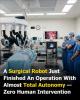 Researchers at Johns Hopkins University just let an AI-guided robot remove a dead pig's gallblad
 World's first consumer wing-in-ground effect aircraft takes flight
 America's Military Readiness Depends On Deployable Nuclear Power
 License Plate Cameras Are About To Start Tracking A Lot More Than Just Your Car
 Heads up: Apparently the government is hiding cameras inside fake utility boxes



Hantavirus: Market versus Government Disease Control

This disease is normally contracted by touching something contaminated with rodent feces and then ingesting the contaminated residue, similar to food poisoning.
This particular type is suspected to be able to pass from human to human only through direct and sustained contact. It is a notifiable disease, meaning when a clinician suspects it they need to contact the authorities who then trigger a containment protocol. In the case at hand it meant the cruiser being diverted to Tenerife upon the offer of the Spanish government, and all passengers being disembarked, taken to their home countries and quarantined there for 42 days.
It is commonly accepted that this is the logical way of doing things. For statists, disease control is one of the areas of government intervention that cannot be argued against. In fact, a lot of libertarians either struggle to come up with arguments against this government intervention or directly avoid commenting.
Government Disease Control
But is it true? Is the government better positioned to navigate these events? Or could the free market do a better job?
The short answer is, as in every other area, government intervention is wasteful and far worse than private solutions. But to dwell into why, we have to understand two little-mentioned facts.
First, as in any other area, disease control is an area of discovery. Humans do not know what the best solutions are, and finding out is a process in which ideas need to be tested and either adopted or put aside.
Second, there is no such thing as black or white in disease control. Diseases are complex processes that act over the most complex machines yet invented, human bodies. So no, there is no such thing as "zero risk." Containment of contagious diseases will always come with some risk. And no, no test is 100 percent. Anyone involved in any scientific study will understand that no matter what the results of studies say, tests always create false positives and false negatives.
Impossibility of Economic Calculation
For a public body, there is no way to compare two containment measures. Contrary to popular thinking, control measures are not a technical issue, they are an economic problem. Scarcity in time and resources means that not all courses of action can be done at the same time. Thus, priorities have to be made and measures have to be selected.