










Breaking News
 UK Insanity: Danny Tommo Denied Bail as Terror Suspects Walk Free! - SF761
 A Once In A 100 Year Investment Opportunity Just Started (Most Aren't Ready) | Felix Nikolas Pre
 America's National Security Scam Rolls On
 The Faulty Premises Underlying Europeans' 'War on Russia' Hyperventilation
Top Tech News
 Elon Musk's Next-Gen Motor Destroy Entire EV Industry
 China's disputed satellite refueling heralds new space war era
 BYD Will Put Solid-State Batteries In An EV Next Year: Executive
 FDA-cleared exoskeleton puts spinal-cord patients back on their feet
 Your Robotic Vacuum Is Watching You -- Could It Someday Testify Against You in Court?
 Why Unigrid's Sodium-Ion Batteries Are the Game-Changer for Off-Grid Energy Storage
 This Battery On Wheels Makes Any Diesel Truck Electric In 5 Minutes
 Mass-Production of AI Infrastructure – Speed Up by 10X
 3D-printed Martian mud homes look critical for life beyond Earth
 Inside The Texas Factory Racing To Break China's Grip On EV Magnets



Baptism of Houthi fire for Mecca mutual defense pact
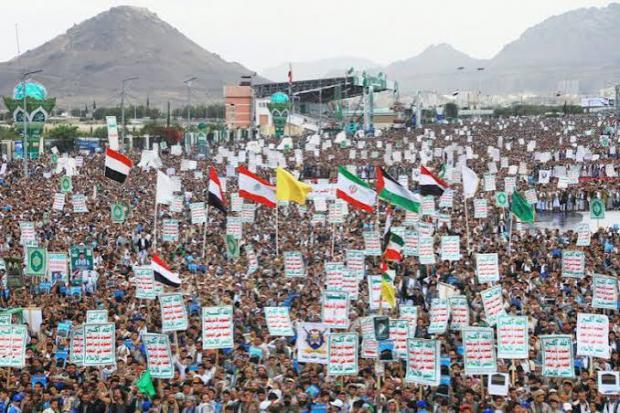
When Saudi Arabia, Turkey and Pakistan agreed to a mutual defense pact in August, it was principally seen as a political commitment. The "Mecca alliance," as it was dubbed, stipulated that an armed attack on one would be treated as an attack on all three, accompanied by deeper military cooperation.
That pact is no longer simply a promise on paper. Within weeks, the three governments began building out the institutions and military mechanisms needed to give that commitment practical meaning.
With Houthi attacks continuing to threaten Saudi territory and Red Sea infrastructure, Turkey on September 19 said it was prepared to meet Saudi Arabia's military needs under the pact. Four days later, Pakistan appointed the first secretary-general to the three-country arrangement – officially called the Mecca Joint Defense Agreement.
Then on September 25, the Saudi, Turkish and Pakistani foreign ministers convened on the sidelines of the UN General Assembly, reviewed progress toward institutionalizing the agreement and called for an urgent meeting of their military chiefs. Those chiefs met in Riyadh that same day to discuss intelligence sharing, military coordination and the integration of capabilities.
Far from diplomatic and security humdrum, these developments make the Mecca pact about more than territorial defense in a region beset by myriad challenges and conflicts, from Iran to Yemen.
For Saudi Arabia, which played the leading role in bringing the pact together, the arrangement responds to a pressing strategic need: strengthening the kingdom's capacity to deter threats to its territory and the Red Sea corridor while reducing its reliance on external security guarantees.
Indeed, protecting the kingdom increasingly means safeguarding not only its territory and airspace, but also the maritime corridors through which its economy reaches global markets.
From territorial defense to corridor security
The Mecca agreement emerged as Saudi Arabia and other Gulf states faced intensified missile and drone threats linked to the Iran conflict and Houthi attacks emanating from Yemen.
But defending Saudi Arabia's territory is only part of the problem. During the current crisis with Iran, Saudi Arabia had to rely more heavily on its western coast and the Red Sea as an alternative outlet for energy exports after the Strait of Hormuz became severely constrained.
For Saudi Arabia, which played the leading role in bringing the pact together, the arrangement responds to a pressing strategic need: strengthening the kingdom's capacity to deter threats to its territory and the Red Sea corridor while reducing its reliance on external security guarantees.
Indeed, protecting the kingdom increasingly means safeguarding not only its territory and airspace, but also the maritime corridors through which its economy reaches global markets.
From territorial defense to corridor security
The Mecca agreement emerged as Saudi Arabia and other Gulf states faced intensified missile and drone threats linked to the Iran conflict and Houthi attacks emanating from Yemen.
But defending Saudi Arabia's territory is only part of the problem. During the current crisis with Iran, Saudi Arabia had to rely more heavily on its western coast and the Red Sea as an alternative outlet for energy exports after the Strait of Hormuz became severely constrained.