










Breaking News
 UK Insanity: Danny Tommo Denied Bail as Terror Suspects Walk Free! - SF761
 A Once In A 100 Year Investment Opportunity Just Started (Most Aren't Ready) | Felix Nikolas Pre
 America's National Security Scam Rolls On
 The Faulty Premises Underlying Europeans' 'War on Russia' Hyperventilation
Top Tech News
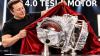 Elon Musk's Next-Gen Motor Destroy Entire EV Industry
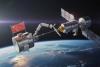 China's disputed satellite refueling heralds new space war era
 BYD Will Put Solid-State Batteries In An EV Next Year: Executive
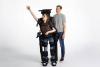 FDA-cleared exoskeleton puts spinal-cord patients back on their feet
 Your Robotic Vacuum Is Watching You -- Could It Someday Testify Against You in Court?
 Why Unigrid's Sodium-Ion Batteries Are the Game-Changer for Off-Grid Energy Storage
 This Battery On Wheels Makes Any Diesel Truck Electric In 5 Minutes
 Mass-Production of AI Infrastructure – Speed Up by 10X
 3D-printed Martian mud homes look critical for life beyond Earth
 Inside The Texas Factory Racing To Break China's Grip On EV Magnets



America's National Security Scam Rolls On
Once upon a time the United States of America was confident that it, shielded by broad oceans to the East and West and having friendly countries that it dominated economically and militarily to the North and South, was safe from any threat by any foreign nation or even any combination of nations. Washington was confident that it could defeat any adversary in conventional warfare and, if push came to shove, its nuclear weapon capability gave it a unique and decisive edge that no enemy would dare to challenge given the examples of Hiroshima and Nagasaki.
That Golden Age, consisting of a few years after World War 2, did not last long however, as policymakers in Washington discerned that the Soviet Union, once an ally against Hitler, posed a great transnational threat due to its government embrace of the political doctrine of "communism." "Communism" was the political poison that threatened to challenge and bring down the free-market capitalism that ruled unchallenged in the United States and as such it was an emergent and growing national security threat, with communist parties increasingly implanted and growing all across Europe as well as in parts of Asia and Latin America. Underlining the possibly lethal implications that came along with that threat, the Soviets even managed to end America's nuclear near monopoly through the Julius and Ethel Rosenberg espionage operation that revealed inter alia to Moscow the highly classified secrets of nuclear weaponry.
Americans suddenly did not seem quite so safe. The threat that southeast Asia was about to succumb to the communist juggernaut led to the Korean War, even though neither the political alignment of Korea nor its military capabilities posed any plausible threat to the United States. The fear of communism persisted for many years after the Korean War ended in an armistice, which still is in place, leading eventually to the Vietnam War, where the North Vietnamese supported by Communist China and Russia, appeared to threaten American allies in the region. In spite of that, it needed a fake Gulf of Tonkin incident to pull the United States into the conflict, which killed 53,000 Americans and nearly 2 million Vietnamese.
But both during and after Vietnam, the threat perception shifted geographically with more emphasis on what was going on in Latin America and the Caribbean, admittedly a lot closer to "home." The CIA was active in subverting leftist regimes as they rose up in the region, most notably including the overthrow of Salvador Allende in 1973 Chile leading to his replacement by friendly-to-Washington General Augusto Pinochet.
The United States also continued to be active in its defense against the Soviets in Europe, working through the North Atlantic Treaty Organization (NATO), which in theory created a bulwark against communist expansion. The United States was the lynchpin of the alliance, providing many of the soldiers and most of the money. By the time when the Soviet Union collapsed in 1991, American taxpayers supported a military budget that was larger than those of most of the world's leading nations, economically and politically speaking, combined. It was regarded as the sole superpower. Then came 9/11 and national security again was featured under George W Bush, who dubbed himself the "new sheriff in town" and divided the world up into those who were "with" the United States and those who were "not."