










Breaking News
 UK Insanity: Danny Tommo Denied Bail as Terror Suspects Walk Free! - SF761
 A Once In A 100 Year Investment Opportunity Just Started (Most Aren't Ready) | Felix Nikolas Pre
 America's National Security Scam Rolls On
 The Faulty Premises Underlying Europeans' 'War on Russia' Hyperventilation
Top Tech News
 Elon Musk's Next-Gen Motor Destroy Entire EV Industry
 China's disputed satellite refueling heralds new space war era
 BYD Will Put Solid-State Batteries In An EV Next Year: Executive
 FDA-cleared exoskeleton puts spinal-cord patients back on their feet
 Your Robotic Vacuum Is Watching You -- Could It Someday Testify Against You in Court?
 Why Unigrid's Sodium-Ion Batteries Are the Game-Changer for Off-Grid Energy Storage
 This Battery On Wheels Makes Any Diesel Truck Electric In 5 Minutes
 Mass-Production of AI Infrastructure – Speed Up by 10X
 3D-printed Martian mud homes look critical for life beyond Earth
 Inside The Texas Factory Racing To Break China's Grip On EV Magnets



Bond markets aren't buying the inflation-is-tamed fairy tale
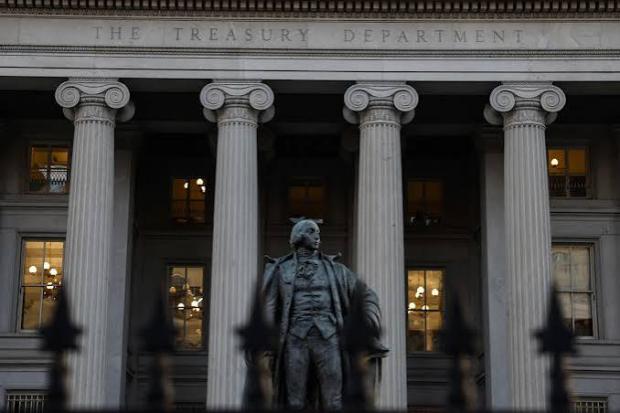
Anyone betting that inflation risks are fading should look at the US Treasury market.
The sharp selloff in Treasury Inflation-Protected Securities (TIPS) suggests the world's biggest bond market is growing less convinced that price pressures are contained. Investors are rethinking the inflation outlook, with implications for Federal Reserve policy, real rates and stock valuations. The upward creep in conventional Treasury yields looks set to continue, and could accelerate.
Demand is already softening. Last week, the Treasury Department saw tepid interest in its $70 billion auction of 5-year notes, which sold at a yield of 5.033%, the highest for a 5-year auction since June 2006. Thirty-year yields are testing 24-year highs, and 10-year yields are near two-decade highs, as the Iran war's inflation shock shakes up the global economy.
Oil is the swing factor. "The 'Yes, No, Maybe So' jawboning over the Strait of Hormuz reopening is keeping investors on edge," says Craig Johnson, chief market technician at Piper Sandler. Ian Lyngen, rates strategist at BMO Capital Markets, notes that the "historically strong correlation between oil and yields will leave the market particularly focused on the durability of the latest diplomatic efforts in the Middle East."
Yet markets still don't seem prepared for what may come. "It's striking how many market participants have been surprised by the recent surge in US yields," says Allianz economist Mohamed El-Erian.
"The fundamental drivers have been evident for some time. What's playing a far larger role than it should is psychological anchoring: the collective mindset shaped by more than a decade of artificially low, repressed yields following the 2008 global financial crisis," he says.
That complacency means the adjustment for global debt markets could be more sudden and disorienting than many investors admit.
The strain is already showing up in households. Thirty-year Treasury yields reached their highest level since 2002 on the same day the Conference Board reported that US consumer confidence had fallen to a 12-year low.
The two data points reflect the same problem: persistent inflation is fueling an affordability crisis. Gasoline above $4 a gallon, soaring diesel costs and surging heating oil prices are taking a heavy toll on consumer sentiment.
As Conference Board economist Dana Peterson puts it: "Consumers' write-in responses regarding factors affecting the economy were mostly pessimistic in September. References to prices, the high cost of goods and services, and oil and gas prices in particular, rose to new heights."
All this suggests that market action in the $2.153 trillion TIPS market is not irrational or an aberration. Rising real yields indicate that the market expects the US economy to remain resilient — at least in pockets thanks to AI — while inflation pressures intensify.
This trajectory speaks to the magnitude of the Federal Reserve's policy dilemma. On Sept. 16, the Federal Open Market Committee hiked rates 25 basis points to a range of 3.75% to 4% in a unanimous vote. Even Fed Chairman Kevin Warsh, chosen by US President Donald Trump to lower rates, supported the tightening move.
This is kicking up a uniquely animated debate about whether the Fed has lost the plot. Count Moody's economist Mark Zandi among those worried the Fed is making a mess of things by tightening into both internal and external shocks.
"The odds of a serious Fed policy mistake are uncomfortably high and rising," Zandi noted, adding that "the economy is already growing near potential (2% real GDP growth) and operating at full employment."