










Breaking News
 THE DEEP STATE CAN NO LONGER STOP THE DISCLOSURE DAM FROM BREAKING!
 Gold's Drop 'Not a Concern' - Why Road to $10k Is Still Intact: Edward Dowd
 #677: All Along the Watchtower | John Sneisen
 What does it mean to win the AI race?
Top Tech News
 Elon Musk's Next-Gen Motor Destroy Entire EV Industry
 China's disputed satellite refueling heralds new space war era
 BYD Will Put Solid-State Batteries In An EV Next Year: Executive
 FDA-cleared exoskeleton puts spinal-cord patients back on their feet
 Your Robotic Vacuum Is Watching You -- Could It Someday Testify Against You in Court?
 Why Unigrid's Sodium-Ion Batteries Are the Game-Changer for Off-Grid Energy Storage
 This Battery On Wheels Makes Any Diesel Truck Electric In 5 Minutes
 Mass-Production of AI Infrastructure – Speed Up by 10X
 3D-printed Martian mud homes look critical for life beyond Earth
 Inside The Texas Factory Racing To Break China's Grip On EV Magnets



Patients Who Took Tamiflu More Likely to Die Than Those Who Didn't, New Trial Finds
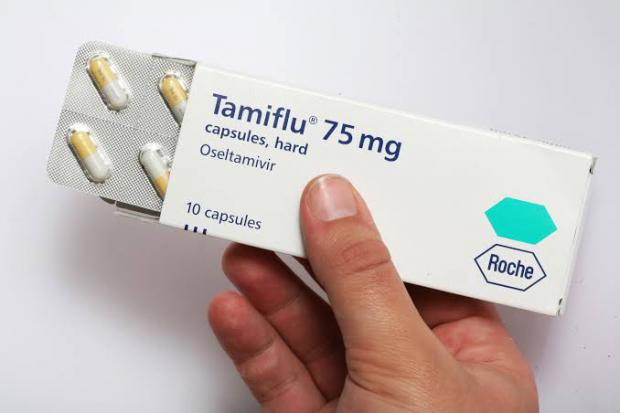
Over 20 years after it entered routine practice, researchers have finally done the randomized trial that should have been done before the drug was widely prescribed for critically ill influenza patients. The trial found that not only did Tamiflu provide no benefit — but more patients died with Tamiflu than without it.
For more than two decades, Tamiflu has been a cornerstone of global pandemic planning.
Governments spent billions stockpiling it, the World Health Organization (WHO) placed it on its Essential Medicines List, and doctors routinely prescribed it to severely ill flu patients on the assumption that it could prevent complications and save lives.
But until now, no randomized trial had compared Tamiflu with no antiviral in critically ill patients.
The international REMAP-CAP trial has now put that assumption to the test — and found no benefit.
Among 442 critically ill patients with laboratory-confirmed influenza assigned to receive Tamiflu for five days, 10 days or no antiviral, the results were clear.
About 20% of patients given Tamiflu had died by 90 days, compared with about 14% of those who received no antiviral.
In other words, more patients died when they were given the drug.
The authors concluded that Tamiflu was "ineffective and highly likely to increase 90-day mortality" and should no longer routinely be administered to critically ill patients with seasonal influenza.
The new findings are the latest chapter in Tamiflu's troubled history.
The hype of its arrival
Tamiflu arrived in the late 1990s with a compelling promise. The drug blocked neuraminidase — an enzyme the virus uses to spread from infected cells.
The logic was that if the drug could slow the virus and shorten the aches, fever and fatigue of influenza, perhaps it could also prevent serious complications, hospitalization and death.
It was an easy sell. Just as antibiotics could treat bacterial infections, antivirals promised to do the same for viral infections.