










Breaking News
 What does it mean to win the AI race?
 SpaceX's $100 Billion Spaceport Plan Raises Questions on Funding
 Patients Who Took Tamiflu More Likely to Die Than Those Who Didn't, New Trial Finds
 40 Trillion Reasons for Economic Collapse – Part 1, by Single Farmer
Top Tech News
 Elon Musk's Next-Gen Motor Destroy Entire EV Industry
 China's disputed satellite refueling heralds new space war era
 BYD Will Put Solid-State Batteries In An EV Next Year: Executive
 FDA-cleared exoskeleton puts spinal-cord patients back on their feet
 Your Robotic Vacuum Is Watching You -- Could It Someday Testify Against You in Court?
 Why Unigrid's Sodium-Ion Batteries Are the Game-Changer for Off-Grid Energy Storage
 This Battery On Wheels Makes Any Diesel Truck Electric In 5 Minutes
 Mass-Production of AI Infrastructure – Speed Up by 10X
 3D-printed Martian mud homes look critical for life beyond Earth
 Inside The Texas Factory Racing To Break China's Grip On EV Magnets



What does it mean to win the AI race?
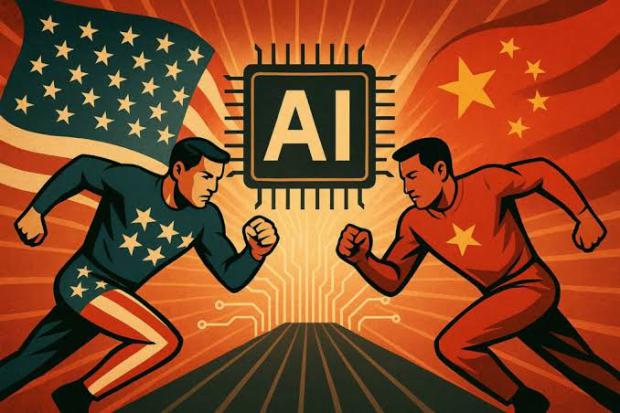
When Donald Trump and Xi Jinping met in Washington last week, artificial intelligence was among the issues dividing their countries.
Days earlier, Treasury Secretary Scott Bessent said the two sides had agreed to establish a formal AI dialogue, including an incident line, though its protocols had yet to be worked out. The summit produced no new AI agreement. For now, each side will keep building its own advantages in a rivalry neither expects to end soon.
That rivalry is usually described as a race, as though both countries were approaching the same finish line. During his visit, Xi urged a form of competition in which both sides could advance rather than treating one country's gain as the other's defeat.
But a lead in powerful models is different from a lead in putting AI to work across an economy. Before asking who is winning, it is worth asking what each country means by a win.
The answer matters far beyond Washington and Beijing. Countries choosing which models to use, factories deciding how to automate, and workers adapting to new tools will live with the consequences of both strategies.
The winner on a benchmark may ultimately have less influence over those choices than the country whose technology becomes cheaper and easier to deploy.
Different finish lines
In Washington, winning usually means being first: first to artificial general intelligence, with the most capable models, the most advanced chips, and tight control over who may buy them. Bessent put the stakes bluntly: "If they (the Chinese) were to pull away from us on AI, then nothing else would matter."
In Beijing, winning looks more like being everywhere. The state's "AI Plus" plan measures success by adoption, embedding AI into factories, power grids, vehicles and public services at home, while Chinese open models serve as a low-cost foundation for developing economies abroad. A good-enough model used throughout an entire economy can matter more than the best model locked in a laboratory.
AI leadership can be judged across at least five categories:
Capability: Who builds the most powerful models.
Infrastructure: Who has the chips, data centers, and electricity to run them.
Adoption: How widely people and businesses actually use AI.
Physical deployment: How far AI moves off screens and into machines.
Social capacity: Whether a society can absorb the disruption without weakening its institutions or leaving its population behind.