










Breaking News
 Bots Now Outnumber Humans Online And The Internet Was Never Built For This
 Tulsi Gabbard Makes a Grand Exit
 Pakistan Says US-Iran Deal 'Has Been Reached'
 With One Strike, Netanyahu Tries To Kill Two Peace Deals
Top Tech News
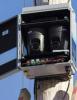 Heads up: Apparently the government is hiding cameras inside fake utility boxes
 Sodium Batteries And EVs That Power The Grid: Inside GM's Big Energy Push
 NUCLEAR ENGINE - UNLIMITED LUXURY - 20 YEARS WITHOUT REFUELING
 China Unveils Nuclear-Powered Floating Hub For Green Shipping
 China Launches World's 1st Commercial Brain Chip, Beating Elon Musk's Neuralink!
 Modular next-gen US nuclear reactor goes critical
 How EMF's cause disease
 This Company Will Add Phone, AirPod, and Smartwatch Trackers to License Plate Readers
 Elon Details SpaceX AI Data Center in Space Details and Roadmap
 5-in-1 miniature surgical robot is the size of a seed


Bots Now Outnumber Humans Online And The Internet Was Never Built For This

Cloudflare's Radar dashboard puts bots at 57.5% of all HTTP requests to HTML content, humans at 42.5%. Prince had predicted the crossover by end of 2027, but we got there eighteen months early.
The internet was architected around human usability and attention, and the entire world of digital advertising, SaaS conversion funnels, publisher monetization, and e-commerce UX sits on that assumption. Imperva's 2026 Bad Bot Report frames it: companies that continue operating under the assumption that users are human, risk misreading their own systems. For any VC investors this is a potential repricing event across every category that monetizes human attention, as every media asset, ecommerce site and brand was built for humans - not bots.
The culprit is not the old wave of scraper bots and search crawlers, but agentic AI. At SXSW in March, Prince described the request-volume asymmetry: a human shopping for a camera visits five websites; the agent doing the same task visits 5,000. HUMAN Security's 2026 State of AI Traffic report found AI-driven traffic growing eight times faster than human traffic across 2025. Agentic AI, bots acting on behalf of users rather than scraping for training data, made up just 1.7% of automated traffic at the start of last year. By the end of 2025 that category had grown 8,000%.