










Breaking News
 Bright Videos News, June 15, 2026 - Fragile Peace Terms Won't Last Through Friday...
 Peace Deal Made… But the Hunger Crisis Just Evolved
 Domesticating AI - It's Not Coming, It's Already Here
 How The World Added Decades To Life Expectancy
Top Tech News
 Heads up: Apparently the government is hiding cameras inside fake utility boxes
 Sodium Batteries And EVs That Power The Grid: Inside GM's Big Energy Push
 NUCLEAR ENGINE - UNLIMITED LUXURY - 20 YEARS WITHOUT REFUELING
 China Unveils Nuclear-Powered Floating Hub For Green Shipping
 China Launches World's 1st Commercial Brain Chip, Beating Elon Musk's Neuralink!
 Modular next-gen US nuclear reactor goes critical
 How EMF's cause disease
 This Company Will Add Phone, AirPod, and Smartwatch Trackers to License Plate Readers
 Elon Details SpaceX AI Data Center in Space Details and Roadmap
 5-in-1 miniature surgical robot is the size of a seed


How The World Added Decades To Life Expectancy
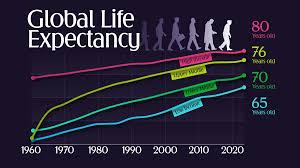
This chart, via Visual Capitalist's Bruno Venditti, tracks life expectancy at birth across four World Bank income groups. While high-income countries still have the longest lifespans, the biggest gains have come elsewhere. Upper-middle income countries have added more than three decades to life expectancy, while low-income countries have made substantial progress as well.
High-Income Countries Still Lead
High-income countries still have the highest life expectancy, reaching 80.3 years in 2024.
That is up from 68.3 years in 1960, a gain of 12 years. These countries started from a much higher baseline, meaning their gains have been slower but still substantial.
Examples include the U.S., Germany, and Japan.

Upper-Middle Income Countries Saw the Fastest Gains
Upper-middle income countries posted the largest increase, rising from 41.9 years in 1960 to 76.3 years.
That is a gain of 34.4 years, the fastest improvement of any group in the dataset. This category includes countries such as China, Brazil, Mexico, and South Africa.
Much of this improvement coincided with rising incomes, better sanitation, expanded vaccination programs, lower child mortality, and broader access to healthcare. Together, these changes helped push life expectancy in many middle-income countries toward levels once seen only in the world's wealthiest economies.