










Breaking News
 Watch: Freed Political Prisoner Tina Peters Says Supporters Kept Her Going After Being Jailed...
 SHOCKING ZIONIST HUMILIATION RITUAL CAUGHT ON TAPE TWICE! Watch A Fortune 500 CEO...
 Snowy 2.0 is the Trillion dollar Black Hole of Australia -- sucking in energy, money, land...
 Grand Theft World Podcast 292 | Memorandum of Misunderstanding
Top Tech News
 World's first consumer wing-in-ground effect aircraft takes flight
 America's Military Readiness Depends On Deployable Nuclear Power
 License Plate Cameras Are About To Start Tracking A Lot More Than Just Your Car
 Heads up: Apparently the government is hiding cameras inside fake utility boxes
 Sodium Batteries And EVs That Power The Grid: Inside GM's Big Energy Push
 NUCLEAR ENGINE - UNLIMITED LUXURY - 20 YEARS WITHOUT REFUELING
 China Unveils Nuclear-Powered Floating Hub For Green Shipping
 China Launches World's 1st Commercial Brain Chip, Beating Elon Musk's Neuralink!
 Modular next-gen US nuclear reactor goes critical
 How EMF's cause disease


Ghalibaf says Strait of Hormuz will never return to pre-war status and will be administered...
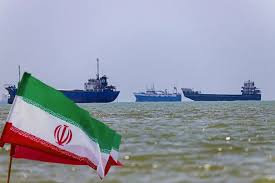
Iran's Parliament Speaker and chief negotiator Mohammad Bagher Ghalibaf said the Strait of Hormuz will no longer operate under its pre-war arrangements and will instead be administered by Iran...
Iran's Parliament Speaker and chief negotiator Mohammad Bagher Ghalibaf said the Strait of Hormuz will no longer operate under its pre-war arrangements and will instead be administered by Iran, state media reported on Tuesday, following the talks between Tehran and Washington in Switzerland aimed at ending hostilities in the region.
Speaking upon his return from Switzerland, Ghalibaf described the talks as productive and said they yielded progress on several key issues, including the Strait of Hormuz, Lebanon, sanctions relief, and the release of frozen Iranian assets.
"The Strait of Hormuz will never return to its pre-war conditions and will be administered by the Islamic Republic of Iran, in accordance with international law," Ghalibaf said, according to Iranian state media.
Hormuz to be managed by Iran
He reiterated the position in a separate statement, saying, "The Strait of Hormuz will be managed by Iran, in accordance with those laws and under arrangements established by Iran."
The remarks came after Iran and the United States agreed to establish communication channels to help maintain safe passage through the strategically important waterway and reduce the risk of military incidents. The Strait of Hormuz is one of the world's most critical shipping routes for oil and gas exports.
Contribution to the regional economy
Explaining the new mechanism, Ghalibaf said, "Problems may arise in the Strait of Hormuz. Therefore, we agreed to establish a center and a telephone hotline so that, during the 30-day period, if any issues occur, they can be resolved more quickly."
"God willing, this will contribute to the prosperity of the regional economy," he added.
The talks in Switzerland followed a period of heightened tensions in West Asia and are part of a broader memorandum of understanding between the United States and Iran aimed at reducing hostilities and creating a roadmap toward a final agreement within 60 days.
Discussions covered developments in Lebanon
Ghalibaf said the discussions also covered developments in Lebanon and efforts to prevent further escalation in the region. He claimed that Iran's participation in the talks helped avoid additional violence.
"Had we not gone to Switzerland, more blood would have been shed among Muslims and Shias in Lebanon at any moment," he said.
'We don't trust Americans': Ghalibaf
The Iranian official also emphasised Tehran's longstanding distrust of Washington, stating, "We have never trusted the Americans; we don't trust them now, and it is only reasonable to remain distrustful in the future."