










Breaking News
 The Hybrid Semi-Truck Is Real: Big Updates from Environment Canada
 Public schools are imploding by 1.5 million kids as parents seek alternatives...
 Securing Peace with Iran Compels Trump to Divorce Israel
 Seven 'far-right' candidates have won in Latin America since USAID was defunded…
Top Tech News
 World's first consumer wing-in-ground effect aircraft takes flight
 America's Military Readiness Depends On Deployable Nuclear Power
 License Plate Cameras Are About To Start Tracking A Lot More Than Just Your Car
 Heads up: Apparently the government is hiding cameras inside fake utility boxes
 Sodium Batteries And EVs That Power The Grid: Inside GM's Big Energy Push
 NUCLEAR ENGINE - UNLIMITED LUXURY - 20 YEARS WITHOUT REFUELING
 China Unveils Nuclear-Powered Floating Hub For Green Shipping
 China Launches World's 1st Commercial Brain Chip, Beating Elon Musk's Neuralink!
 Modular next-gen US nuclear reactor goes critical
 How EMF's cause disease


Netanyahu's war on Iran was a pitch for Israel's future, and it failed
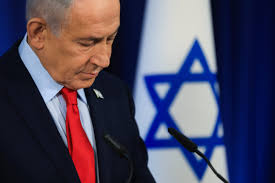
The war on Iran was supposed to make that possible, but it consumed the fiscal space, U.S. backing, and Gulf capital needed for it.
There is a version of the war on Iran that Benjamin Netanyahu would like you to believe is only about centrifuges and the survival of the Jewish state. The other, far less discussed version, is one where Israel's prize is a railway.
Israel's ambition, on the evidence of its own Prime Minister's words, is to become the Mediterranean terminus of trade flowing out of the Gulf and South Asia — the place where Asian containers meet European ports without troubling the Strait of Hormuz. The war, however it ends, is one route to that destination. The irony, and it is not a small one, is that the campaign generating the opportunity is also consuming the means to seize it.
Netanyahu said as much himself twice, three years apart, sparing us the trouble of reading between the lines.
In September 2023, days after India, the U.S., Saudi Arabia, the UAE, and the EU unveiled the India-Middle East-Europe Economic Corridor (IMEC) at the G20 in New Delhi, he called it "the greatest cooperation project in our history" and promised Israel would become "a central junction" within it — its ports and railways forming, in his words, "a new gateway from India through the Middle East to Europe, and back."
At the UN that same month, he produced two maps, in the manner of a man who has never met a prop he didn't like: one labeled "The Curse," depicting Iran's regional network; the other "The Blessing," showing Israel wired by rail and pipeline to Jordan, the Gulf, and onward to Europe. He liked the device enough to bring it back a year later, telling the 2024 General Assembly, "This is the map I presented here last year." Subtlety has never been the point.
By March 2026, with Hormuz effectively closed by Iran's response to the war of aggression launched against it, the pitch had stopped being a pitch and became something closer to a thesis statement.
At a press conference in Jerusalem on March 19, Netanyahu drew the line from war to railway without being asked twice: "Instead of passing through choke points like the Strait of Hormuz and Bab el-Mandeb, we can build pipelines westward through the Arabian Peninsula to Israel's Mediterranean ports, and effectively eliminate these choke points." A closed Hormuz, in other words, is not an unfortunate side-effect of the war. It is the argument for the alternative Israel has been selling investors since before October 2023.
The trouble with selling an alternative is that you have to build it, and building things, it turns out, is hard when your defense budget is eating the country alive. Becoming a logistics hub demands the unglamorous staples of statecraft — port capacity, rail, labor, fiscal headroom — at precisely the moment all four are being requisitioned elsewhere.