










Breaking News
 Here is what we know: U.S. taxpayer money, funneled through USAID and NIH,...
 Empire at 250: Can the Principles of 1776 Survive the American Police State?
 The Public Choice Problem of AI Rights
 Greenspan Was The Perfect Fed Chair. That Is Not a Compliment
Top Tech News
 World's first consumer wing-in-ground effect aircraft takes flight
 America's Military Readiness Depends On Deployable Nuclear Power
 License Plate Cameras Are About To Start Tracking A Lot More Than Just Your Car
 Heads up: Apparently the government is hiding cameras inside fake utility boxes
 Sodium Batteries And EVs That Power The Grid: Inside GM's Big Energy Push
 NUCLEAR ENGINE - UNLIMITED LUXURY - 20 YEARS WITHOUT REFUELING
 China Unveils Nuclear-Powered Floating Hub For Green Shipping
 China Launches World's 1st Commercial Brain Chip, Beating Elon Musk's Neuralink!
 Modular next-gen US nuclear reactor goes critical
 How EMF's cause disease


Why Off-Grid Solar Suddenly Makes Instant Sense
I'll be the first to admit it: I spent years mocking early electric vehicles. The early models had laughable range, charging took hours, and battery replacement costs could total the car. When I first heard about people planning cross-country trips in a Nissan Leaf, I thought they were insane. And I was right — for that era. The technology simply wasn't ready.
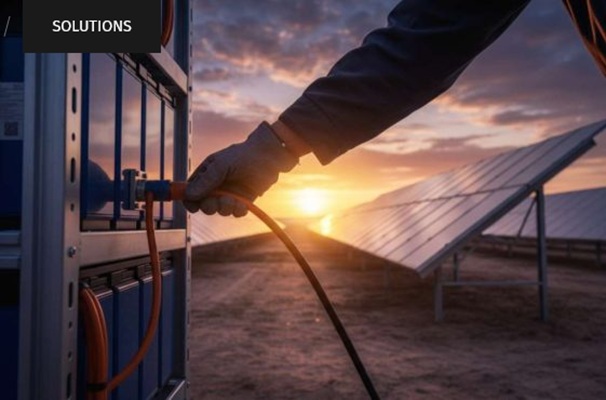
But here's what changed: I'm currently hauling solar panels, rack-mountable lithium iron phosphate batteries, and a high-voltage inverter to my studio in Central Texas, preparing to build a full off-grid power system that I'll demonstrate on camera. I've spent the last several months researching battery chemistry, solar controller specs, and load calculations because suddenly things have changed. The Eastern Power Grid is projected to run out of emergency peak power by June 2027, and PJM Interconnection — serving 67 million people — is heading for catastrophic failure, largely due to increasing data center demand for power .
That's not a theory; that's a Goldman Sachs projection. Meanwhile, battery chemistry improvements and manufacturing economies of scale have finally produced vastly superior batteries with a 10+ year usage life, priced affordably. The combination of grid fragility and battery maturity has forced me to change my course and build my own system to bypass fossil fuels and an eroding domestic power grid.